Gentle, profound
release for the whole body.
Craniosacral Therapy is a light-touch, non-invasive form of bodywork that supports your body’s natural healing process by gently working with and releasing restrictions through the craniosacral system.
Rooted in over
100 years of study.
Craniosacral Therapy (CST) originated in the early 20th century with Dr. William Sutherland, an osteopath who discovered subtle rhythmic movements in the cranial bones — challenging the long-held belief that the skull is immobile.
In the 1970s, Dr. John Upledger expanded on Sutherland’s work, formalizing CST as a gentle, hands-on technique that supports the body’s natural healing by releasing tension through the craniosacral system and enhancing nervous system function.
What is the
craniosacral system?
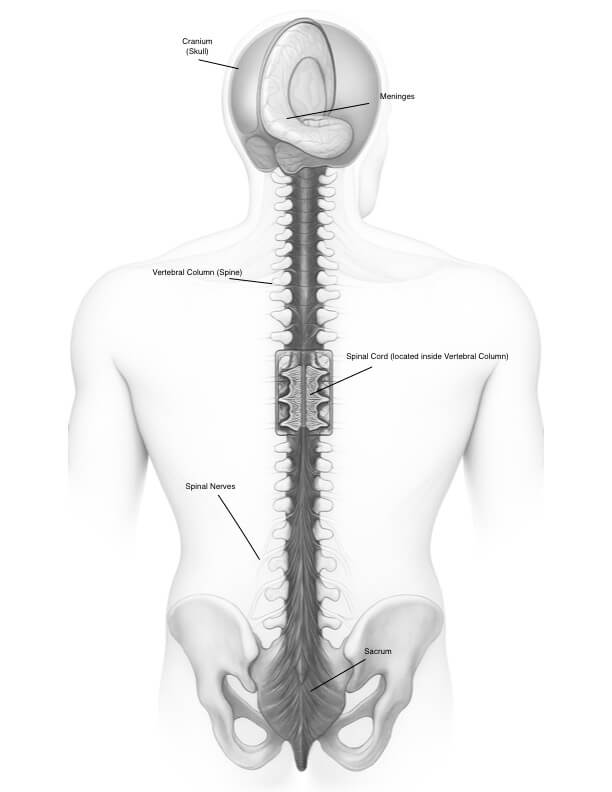
The craniosacral system includes the cranium (skull), the spine, and the sacrum — the small, triangular pelvic bone at the base of the spine — along with the membranes and cerebrospinal fluid (CSF) housed within them.
The membranes and CSF protect and support the brain and spinal cord, together known as the central nervous system.
How does it
help?
Craniosacral Therapy works by using very gentle, sustained holds — with pressure typically no heavier than five grams, about the weight of a nickel — to assist in releasing fascial restrictions around the craniosacral system. This release improves the overall state of the body’s central nervous system, helping bring the body back into balance through more proper functioning of its other systems, including digestion and respiration.
Conditions that can
benefit from CST.
What can I expect
in my session?
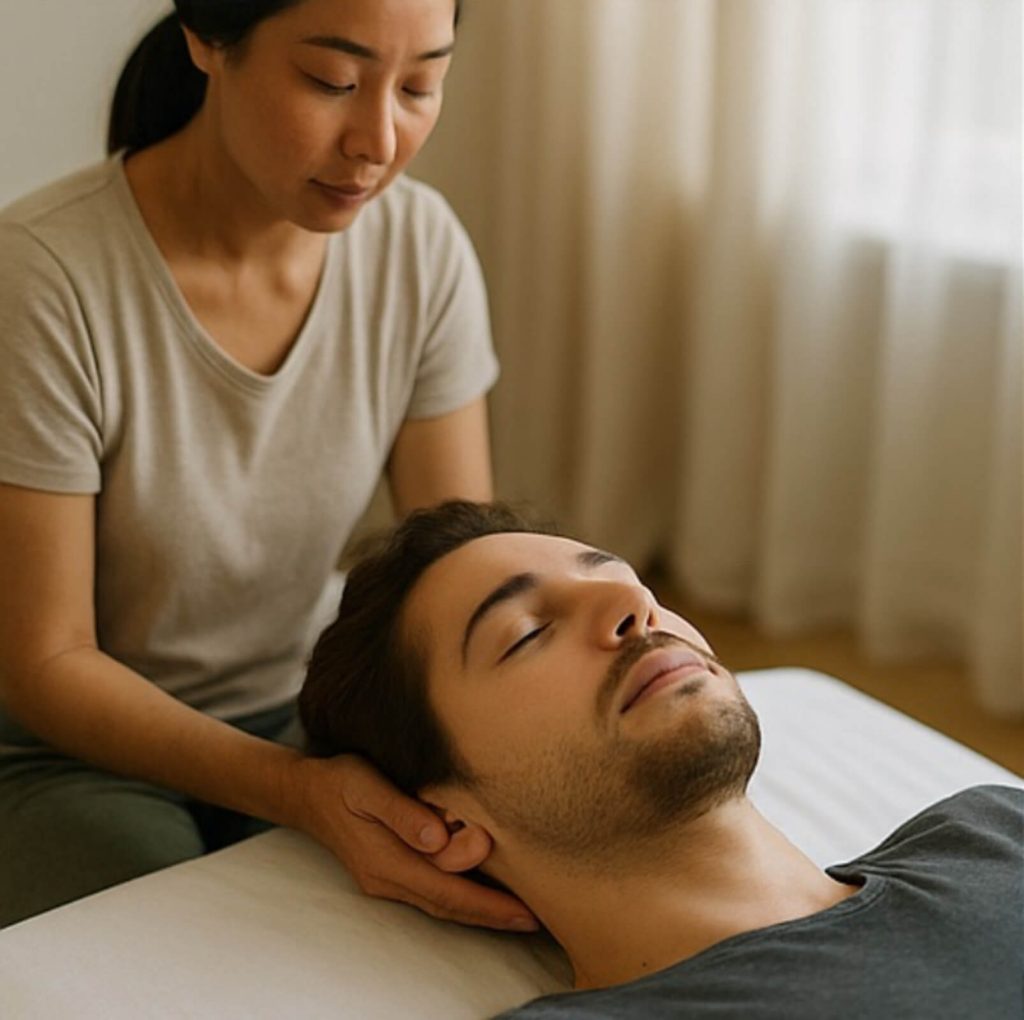
Sessions are performed fully clothed, though you may be under sheets or blankets if you feel chilly. Your practitioner will place their hands lightly on certain areas of the body — including but not limited to the head, spine, sacrum, or elsewhere — to tune into subtle rhythms and release deep tension patterns, reducing symptoms and improving overall functioning.
Clients often report sensations of warmth, soft pulsing, or gentle unwinding as restrictions begin to release. By the end of a session, most describe a deeper level of relaxation and peace, along with an ease of symptoms related to stress, tension, and discomfort.
Return to balance,
clarity, and calm.
If you’re experiencing pain, discomfort, tension, or stress — or simply seeking a deeper connection to your body — CST offers a safe, compassionate space to return to balance.
Schedule a Session →